
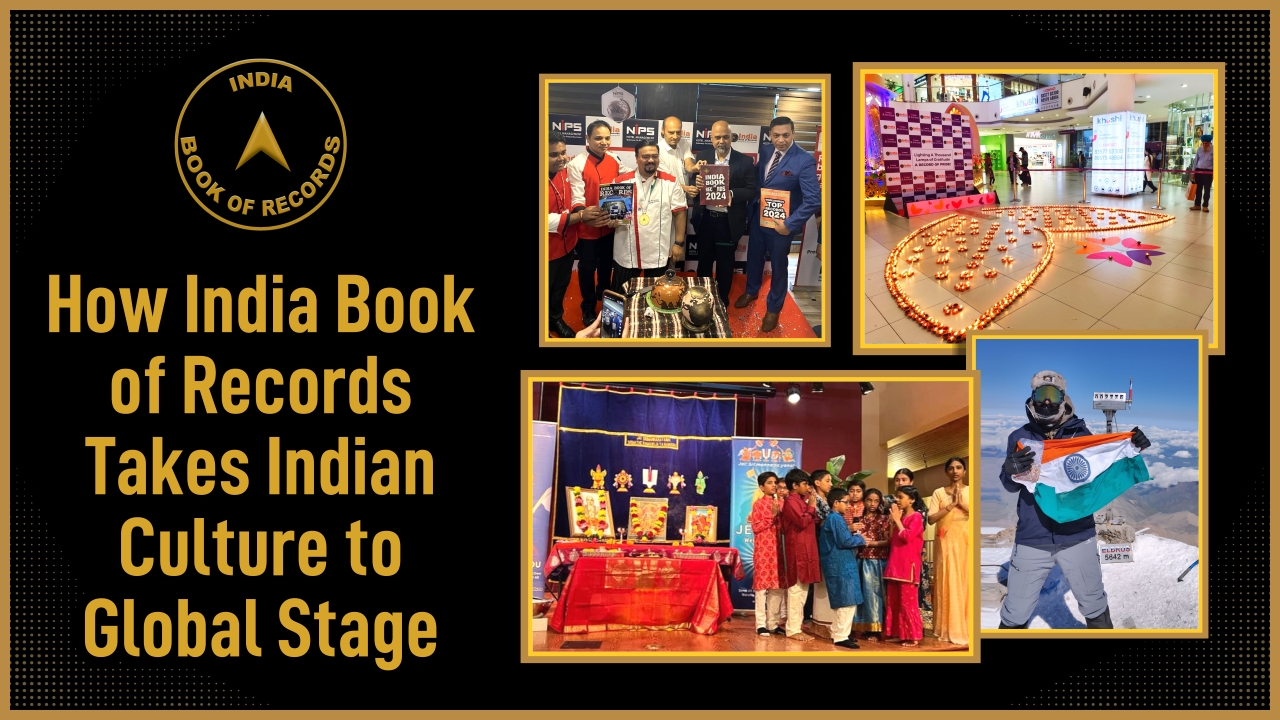
India, the land of vibrant traditions, rich heritage, and unparalleled diversity; has been captivating global audiences with its cultural depth. For more than two decades, India Book of Records (IBR) have emerged as a powerful platform to showcase and celebrate the country’s cultural richness. Through recognizing and celebrating exceptional records across fields like art, culture, and heritage, India Book of Records serves as an unparalleled stage for Indian talent; fostering pride, preserving diversity, and inspiring younger generations.
By celebrating achievements, IBR motivates individuals to pursue their passions and contribute to India’s cultural landscape. Additionally, such accomplishments often spark cultural exchange programs; like an Indo-Vietnam cultural exchange, that foster mutual appreciation and promote Indian culture abroad.
The Role of IBR in Cultural Documentation
The India Book of Records serves as a treasury of extraordinary human achievements across categories; from yoga to classical dance, traditional arts to linguistic skills and more. The platform documents a wide array of culturally incredible records, acting as a living archive of India’s diverse traditions. Unlike textbooks or documentaries that record historical events or scholarly interpretations, IBR captures real-time cultural expressions. This living documentation not only preserves culture for future generations but inspires people to reconnect with their heritage.
Encouraging Regional Art Forms
One of the most powerful ways IBR promotes Indian culture is by recognizing regional art forms and practices that often go unnoticed. India is home to hundreds of folk dances, musical traditions, and indigenous crafts unique to their specific regions. When individuals or groups bring rare regional dances and cultural expressions to record status; IBR brings them visibility, relevance, and renewed pride.
Massive Drawing Competition Across Maharashtra and Goa: The ‘Art Beat’ competition illustrates this beautifully. Lokmat Campus Club organised a massive drawing competition across Maharashtra and Goa in 2023 to celebrate Jawaharlalji Darda’s centenary, with 5,06,330 students from 35 districts participating—showcasing regional art and creativity on an extraordinary scale.
Recognition of such regional artistic endeavors encourages local governments, schools, and NGOs to integrate these practices into cultural programs, ensuring they are passed on to younger generations.
A Platform for Youth to Engage with Tradition
In a fast-changing world, modern influences often temper traditional engagement among the young generation. While modernization is inevitable, cultural continuity is essential, and IBR serves as a vital bridge between the old and the new by encouraging young Indians to take part in record attempts grounded in tradition.
Yoga: A Global Cultural Ambassador
No conversation about Indian culture is complete without mentioning yoga as it’s among India’s the greatest gifts to the world. IBR frequently documents yoga-related records, from mass participation events to marathon performances of asanas, serving as a powerful reminder of yoga’s Indian roots. Let’s have a look at a couple of such records:
Maximum students performed yoga asanas across the state: On International Yoga Day 2024, 15,119 students from Velammal Bodhi Campus (29 branches across Tamil Nadu) performed asanas like Surya Namaskar, various Pranayamas, and Trikonasana simultaneously across branches in Chennai and elsewhere.
Maximum participants with disabilities performing yoga under one roof: In June 2025, 3,282 individuals with a range of disabilities gathered at Kanha Shanti Vanam, Telangana, and performed yoga together; an extraordinary demonstration of inclusivity and empowerment.
By documenting feats like these, IBR reinforces yoga’s Indian origins and cultural diplomacy; especially crucial amid global commercialization. Such records encourage international participants to acknowledge India as the birthplace of yoga. Celebrations on International Yoga Day with record-breaking events amplify the message that yoga is more than physical—it’s a profound spiritual tradition from India.
Promoting Multilingualism and Indigenous Languages
India is a linguistic powerhouse, with thousands of dialects and numerous major languages. Unfortunately, many regional and tribal languages are endangered. IBR plays a vital role in promoting multilingualism through language-related records—like youngest bilingual recitations or longest poems in regional tongues—raising awareness and encouraging linguistic pride. While I wasn’t able to locate exact IBR entries for recitations or poems in Dogri or Manipuri during this revision, I suggest exploring IBR’s archives in the “linguistic records” category to insert a suitable real achievement here in the final version.
Counting from 1 to 10 in maximum languages by a kid: 5 years old Aydin Sajad from Kerala, showed exceptional memory and multilingual skills. He counted from 1 to 10 in 29 languages, including English, Arabic, Hindi, German, Nepali, Punjabi, Danish, Italian, Greek and Portuguese in 4 minutes and 27 seconds only.
Celebrating Festivals and Rituals
India’s regions celebrate life through festivals in unique ways. From Holi to Pongal, Diwali to Baisakhi, IBR showcases the scale and spirit of celebration through record-setting feats like largest rangoli, longest diya lighting, or most spirited congregations. These entries capture participation magnitude and the deep emotional connections to tradition. IBR’s documentation immortalizes the festive fervor, encouraging community celebrations that bind people together.
Largest Gold-Plated Idols of Lord Ganesha and Goddess Lakshmi: Fun Republic Mall of Lucknow made the 12 feet long gold-plated idols of Lord Ganesha and Goddess Lakshmi using 24-karat gold paint, clay and fibre on the auspicious occasion of Diwali to promote wealth and wisdom.
Empowering Women Through Cultural Achievements
In many areas of India, cultural practices intersect with gender norms. IBR often highlights women achievers who break stereotypes—whether through record-setting handicrafts, classical dance performances during pregnancy, or women-only musical troupes. These stories empower and inspire, proving that cultural evolution includes everyone—and that women are just as essential to India’s cultural legacy.
Largest hand-stitched multicoloured patchwork quilt made by a team: Thane Municipal Corporation of Thane, Maharashtra, set a unique record wherein a team of 15 women made a large sized hand stitched multicoloured patchwork quilt ‘Godhadi‘ (a type of traditional hand stitched quilt from Maharashtra), measuring 1000 square feet, by utilising old sarees and discarded pieces of cloth.
Technology and Digital Preservation of Culture
Although deeply rooted in tradition, IBR effectively uses technology and social media to promote culture. By broadcasting record attempts and achievements across digital platforms, it introduces traditional practices to a global audience. In our era of short attention spans and rapid content consumption, a tribal dance or rare folk-art demonstration can go viral within hours. This digital visibility ensures Indian culture thrives not only in print but also in the digital age—accessible to Indians at home and abroad.
Fostering National Integration Through Cultural Records
India’s diversity could sometimes lead to division—but platforms like IBR promote unity through cultural celebration. By showcasing achievements from every state, region, and community, IBR affirms that all traditions are equally valuable and strengthen the idea of India. Whether it’s a martial-arts display from Punjab, a Kuchipudi recital from Andhra Pradesh, or a tribal painting from Madhya Pradesh, IBR puts them on equal footing—fostering appreciation for India’s cultural mosaic as a unified whole, reducing regional biases, and nurturing shared identity.
Inspiration for Future Generations
Ultimately, the India Book of Records acts as a catalyst for cultural continuity. When children see peers creating a 50-foot Warli painting or singing 200+ folk songs, ripple effects follow: teachers introduce these in school projects, communities launch cultural workshops, and parents feel motivated to pass on traditional skills. By turning cultural acts into celebrated records, IBR ensures that India’s traditions are not only preserved; but actively practiced and propagated.
IBR: A Modern Platform for Timeless Traditions
In conclusion, the India Book of Records is more than a collection of extraordinary feats; it is a platform that celebrates and sustains India’s cultural heritage. By recognizing traditional arts, language, rituals, and performance, IBR brings India’s cultural practices into the national spotlight. Whether through encouraging youth participation, highlighting regional uniqueness, or promoting cultural pride, IBR ensures that India’s priceless traditions are not lost to time, but flourish in modern contexts.
