
How the Tata Sierra and Tata Harrier proved that Indian engineering can go the distance, quite literally
The spike of fuel prices isn’t taking a rest. This often dampens the mood every time you decide for a highway drive, and cuts down your budget during family road trips. And that’s why, what Tata Motors pulled off at NATRAX on 30 November 2025 deserves more than a passing mention.
Two national records. One day. One engine family. Certified by the India Book of Records.
The Stage: NATRAX, Indore
Not all test tracks are created equal. NATRAX, the National Automotive Test Tracks facility near Pithampur, Indore, spans nearly 3,000 acres and is India’s most advanced automotive testing and certification centre. Built under the National Automotive Testing and R&D Infrastructure Project, it’s purpose-built for exactly this kind of rigorous, controlled validation. No shortcuts, no loopholes, just numbers that can make an impact.
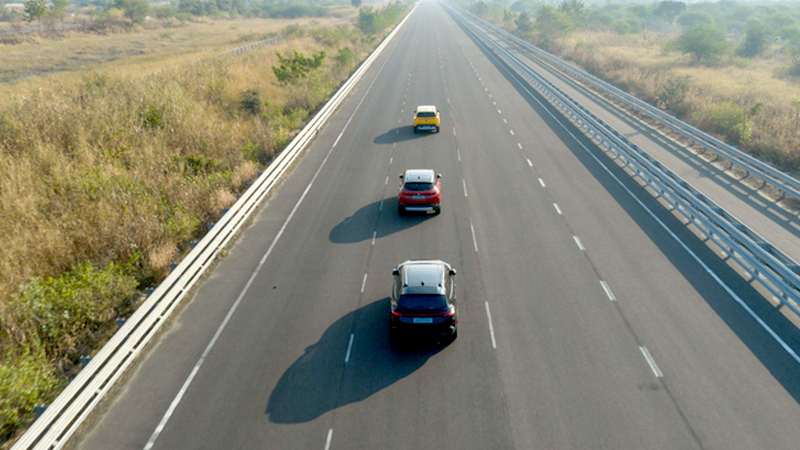
Record #1, Tata Sierra: 29.9 km/l Over 12 Continuous Hours
The Pixel Motion team drove the Tata Sierra which was equipped with the new 1.5-litre Hyperion petrol engine that moved non-stop from 7 am to 7 pm, with no need for refuelling breaks. The only pauses were for driver changes.
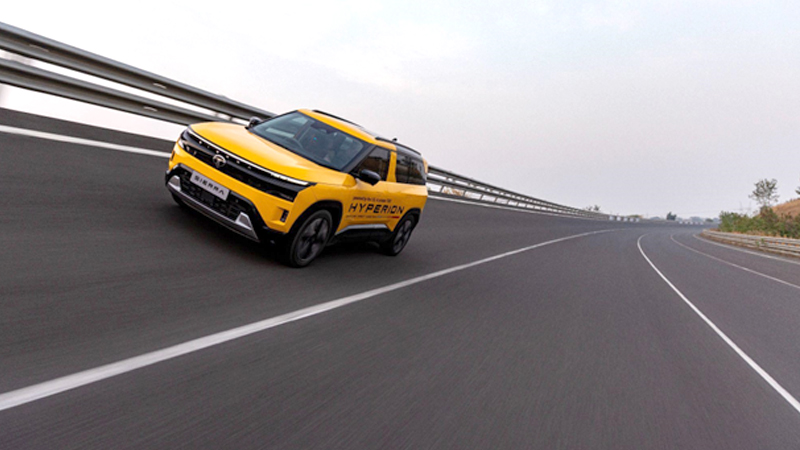
At the end of twelve hours, the Sierra had delivered a maximum fuel efficiency of 29.9 kilometres per litre, earning it the record for Maximum Fuel Efficiency Achieved in 12 Hours. That’s not a lab figure. That’s a real vehicle, on a real track, holding consistent performance for half a day straight.
Record #2 Tata Harrier: 25.9 km/l in the SUV Category
The second attempt targeted the SUV segment specifically. Under identical conditions, the Pixel Motion team drove the Tata Harrier, which was also powered by the 1.5-litre Hyperion engine, through the same 12-hour window.
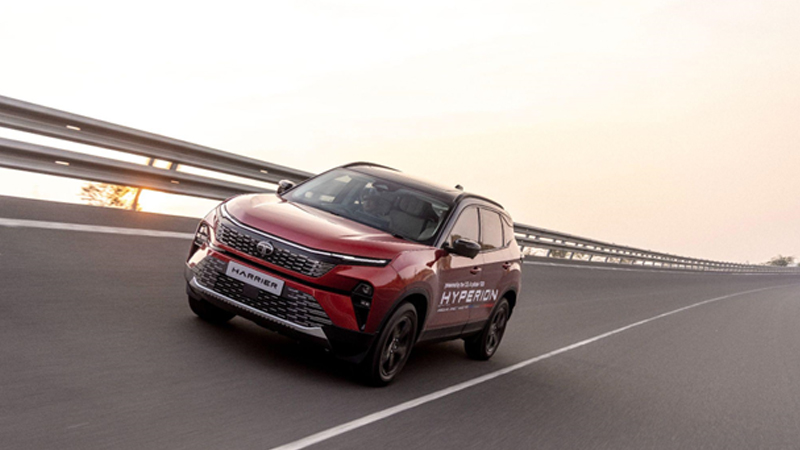
When the 12 hour window ended, Harrier had consumed 25.9 kilometres per litre, setting the record for Maximum Fuel Efficiency Achieved by a Petrol Manual SUV in 12 Hours. For an SUV of the size and distinctiveness of Harrier, this is a genuinely remarkable number.
The Engine Behind Both Records: Hyperion 1.5L Petrol
Both achievements trace back to the same engineering core, that is Tata’s Hyperion engine platform. The 1.5-litre petrol unit was built with efficiency as a design principle, not an afterthought:
- Advanced combustion geometry for optimal fuel burn
- Friction-optimised components that reduce energy loss at every turn
- A broad torque band that enables smooth, stable cruising over long durations
These aren’t just marketing claims. They are the reason two different vehicles, driven across twelve continuous hours, stayed consistent from the first kilometre to the very last.
Moreover, while commenting on the milestone, Mohan Savarkar (Chief product officer at Tata Motors) said, “These records show what focused engineering can achieve. The Hyperion engine was developed to deliver efficiency in real driving conditions, and this validation strengthens our confidence in its capabilities.”
More Than Speed: A Test of Sustained Discipline
What makes a 12-hour efficiency record genuinely meaningful is what it asks of both the machine and the team. Sustained high-efficiency driving requires controlled speeds, continuous system monitoring, and accounting for environmental variables in real time. Over such a duration, thermal stability, lubrication performance, and combustion reliability are all subjected to conditions that short-duration tests cannot replicate. That is also why success under these parameters carries direct relevance for the end consumer, as it reflects how a vehicle’s engine performs over prolonged, real-world use.
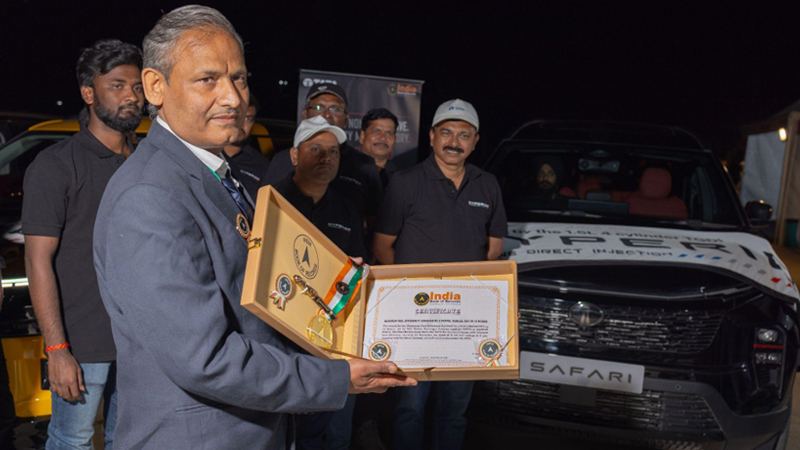
India Book of Records’ adjudicator Mr Antim Kumar Jain was present at NATRAX to present the medals and certificates, verifying both the technical accomplishment and the transparent process followed throughout.
Why This Matters for the Indian Driver
The Indian automotive industry is shifting. Efficiency is no longer a spec-sheet footnote. It is a core performance metric. And records achieved under certified, sustained conditions carry a different weight than peak lab figures.
For anyone considering the Sierra or Harrier, these numbers offer something more valuable than advertising: evidence of what the Hyperion engine can actually do over time, on Indian-adjacent roads, under real operational stress.
Note: All record attempts were conducted by trained professionals under controlled conditions at NATRAX. These tests are designed to validate engineering potential; customer vehicles operate within defined safety and regulatory limits.